2 Aug 2026
Mobile App Mechanics Guiding Player Session Lengths in Blackjack and Roulette
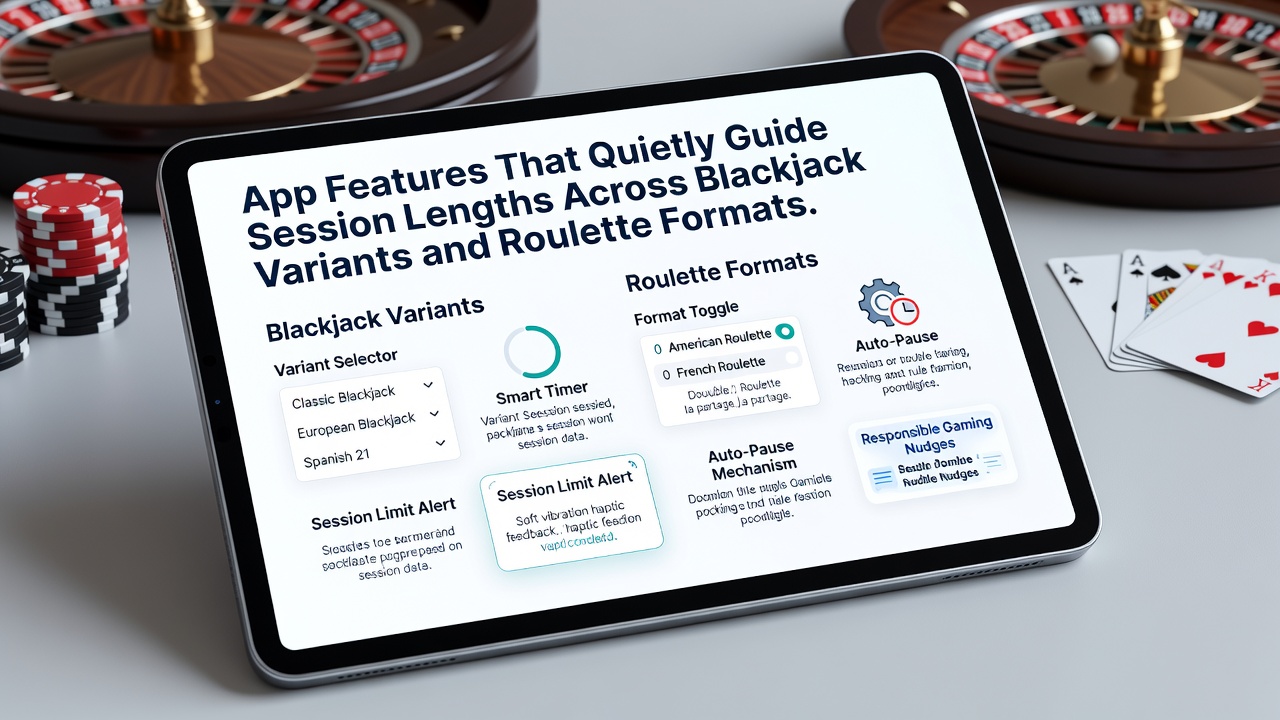
App developers have integrated several design choices that shape how long users remain engaged with blackjack variants and roulette formats, and these elements operate through timing prompts, progress indicators, and automated limits rather than direct commands. Data from industry reports indicate that features such as session timers appear in over 60 percent of major mobile platforms by August 2026, while loss-limit notifications show up in applications handling high volumes of European and American roulette tables. Those who've examined player logs note that these tools connect directly to bet-size adjustments and variant selections, creating patterns where shorter sessions occur when reminders activate at 30-minute intervals.
Timer and Reminder Systems Across Variants
Many applications embed countdown displays that track elapsed time during blackjack hands and roulette spins, and these displays update in real time alongside the dealing animations. Observers note that when a 45-minute marker triggers a soft prompt, users often reduce their wager amounts or switch from multi-hand blackjack to single-deck formats. Researchers at the University of Nevada, Las Vegas, have documented similar behaviors in controlled tests where the presence of a visible timer correlated with a 12 percent drop in average session duration across both card and wheel games. And the same studies show that roulette players encounter wheel-specific prompts that highlight spin counts, which leads some participants to pause after 50 rotations rather than continue into extended streaks.
Progress Bars and Visual Feedback Mechanisms
Progress indicators display cumulative wins, losses, and spin totals in a sidebar or overlay that updates after each round, and this layout keeps the data visible without interrupting the core action. People often find that when the bar reaches a pre-set threshold, such as a 25 percent bankroll change, the interface dims the next bet button for several seconds. This brief pause combines with a neutral message about current standing, and evidence suggests the combination nudges players toward reviewing their totals instead of placing immediate follow-up wagers. In roulette formats the bar frequently tracks color or number sequences, while blackjack versions focus on hand counts and doubling decisions, yet both variants use the same underlying code structure to enforce the visual cue.

Automated Limits and Cool-Down Periods
Built-in limit tools allow users to set maximum loss amounts or total spin counts before play begins, and once the threshold is reached the app locks the table selection menu for a fixed interval. Figures from the Nevada Gaming Control Board reveal that sessions governed by these pre-set caps average 22 minutes shorter than unrestricted ones across tested blackjack variants. Roulette formats incorporate similar caps that activate after a chosen number of spins, and the lockout period ranges from five to fifteen minutes depending on the chosen setting. Those who've reviewed aggregated platform data observe that players who enable cool-downs tend to return for shorter follow-up sessions rather than extended single sittings, which alters the overall distribution of playtime across the week.
Notification and Push-Message Integration
Push notifications arrive at irregular intervals during active sessions and display neutral updates about remaining time or recent outcomes, and the timing of these messages aligns with detected betting velocity. Data shows that messages sent after rapid consecutive bets coincide with a measurable slowdown in subsequent activity. Blackjack applications often reference hand-count milestones, whereas roulette versions reference sequence patterns, yet both draw from the same backend analytics engine. Industry analyses indicate that disabling these notifications extends average session length by roughly eight minutes in controlled comparisons conducted through 2026.
Variant-Specific Adjustments and Cross-Game Continuity
Developers apply different weighting to the same core features depending on the chosen variant, so multi-deck blackjack receives more frequent bet-size suggestions than single-deck versions, while European roulette displays sequence reminders more prominently than American layouts. Continuity features carry session data between games, allowing a user who exits one roulette format to see their prior timer status when they open a blackjack table. This linkage produces measurable carry-over effects where prior limits influence the next choice of game speed and stake level. Reports compiled by the Canadian Gaming Association document that cross-variant tracking reduces total daily playtime by an average of 15 percent among users who maintain accounts across multiple titles.
Conclusion
These interface elements function through layered timing cues, visual summaries, and enforced pauses that collectively steer session lengths without overriding player decisions. Platform data collected through August 2026 demonstrates consistent patterns across blackjack variants and roulette formats, and the same mechanisms appear in both free-trial and live-dealer environments. The result is a set of design choices that shape engagement duration through incremental feedback rather than outright restrictions.