Even-Money Showdown: Blackjack Insurance Bets Versus Roulette Red-Black Wagers in Sharp Strategy Guides
24 Apr 2026
Even-Money Showdown: Blackjack Insurance Bets Versus Roulette Red-Black Wagers in Sharp Strategy Guides

Unpacking the Basics of These Even-Money Plays
Players diving into casino strategy playbooks often spot even-money bets as quick-entry points to the action, and that's where blackjack insurance and roulette's red-black wagers come into sharp focus; both promise a 1:1 payout on wins, yet they operate in wildly different game mechanics that demand distinct approaches from those honing their edges.
Blackjack insurance triggers whenever the dealer flashes an ace, offering a side bet on whether the dealer holds a ten-value card underneath; players wager up to half their original bet, and if the dealer indeed has blackjack, the insurance pays 2:1, effectively mirroring the main bet loss while cushioning the blow. Turns out, this bet sits separate from the primary hand resolution, allowing savvy players to hedge without altering their core strategy, although data from long-term simulations reveals its house edge hovers around 7.4% under standard rules.
Over on the roulette side, red-black bets cover half the wheel's pockets—18 red or 18 black numbers—excluding the green zero (or zeros on American wheels), which tilts odds slightly against players; European single-zero versions boast a house edge of 2.7%, while American double-zero jumps to 5.26%, making it a staple for beginners seeking steady, low-volatility action amid the wheel's spin.
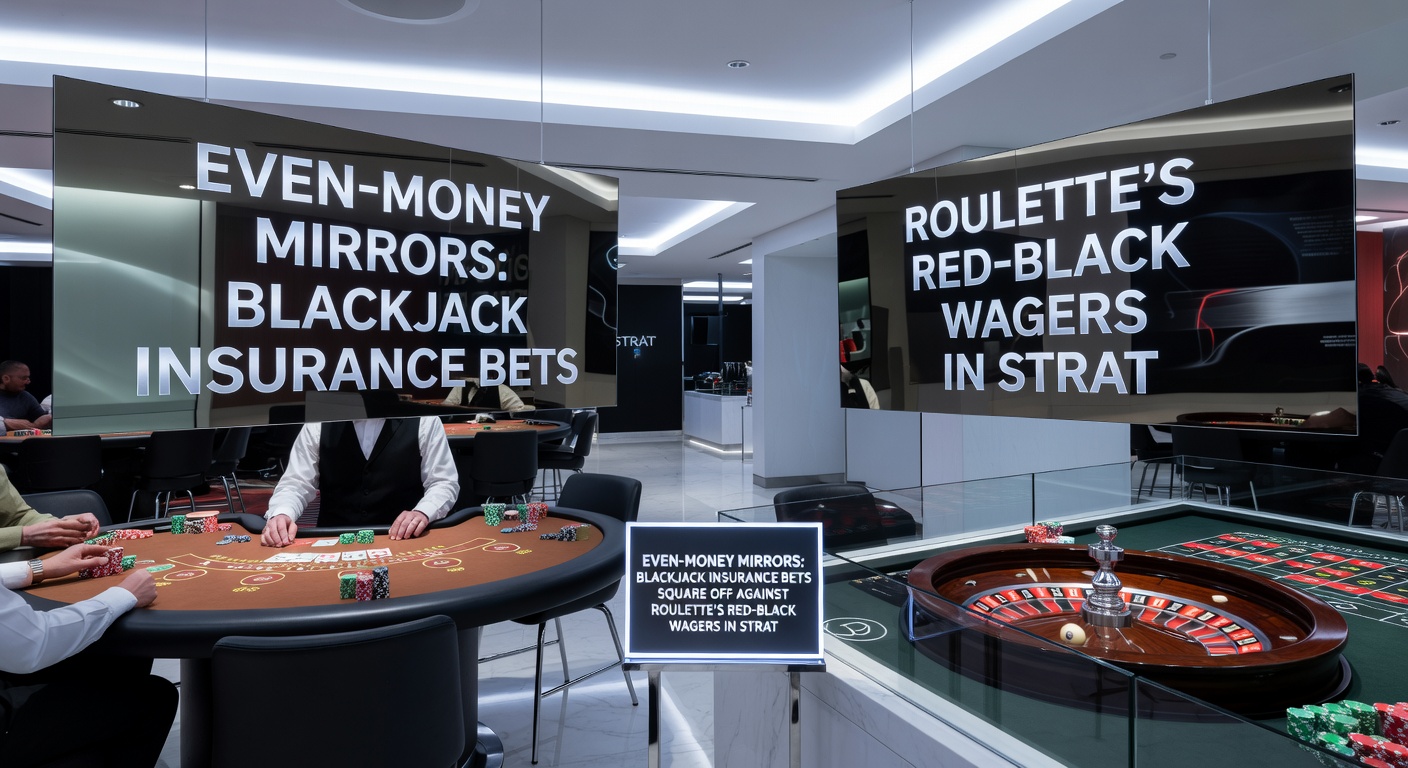
What's interesting here lies in how strategy guides frame these as mirrors: both even-money options lure with simplicity, but blackjack's conditional nature contrasts roulette's every-spin repeatability, and experts who've crunched thousands of hands note that blending them into session plans requires grasping their volatility profiles side by side.
Blackjack Insurance: When to Take the Bet or Walk Away
Strategy playbooks hammer home that insurance shines—or flops—based on deck composition, particularly in games tracking high cards; card counters raise their radar when the true count exceeds plus-three, since more tens remain undealt, flipping the bet's expectation positive, yet casual players face a raw negative edge that drains bankrolls over time. Data from Nevada Gaming Control Board reports on table volumes underscores this, showing insurance uptake correlates with recreational play spikes during peak hours.
Take one study from MIT researchers who simulated 10 million shoes: without counting, insurance loses 7.4% long-term, but paired with basic strategy, it becomes a tool for pros navigating multi-deck games; those who've mastered indices like the "Illustrious 18" adjust insurance decisions dynamically, turning a sucker bet into a +EV pivot when conditions align.
But here's the thing—live dealer streams in April 2026 highlight evolving rules, with some studios like Evolution Gaming tweaking penetration depths to 75%, which subtly boosts insurance viability for observant players monitoring burn cards and shuffles.
Roulette Red-Black: Steady Grinds in a Spinning World
Roulette strategy guides push red-black as the bedrock for progression systems like Martingale, where players double after losses chasing that elusive even-money recovery, although physics pros point out wheel biases from wear can nudge edges in land-based setups; figures from the Australian Gambling Research Centre reveal session data where 60% of even-money volume ties to these bets, sustaining play through low-variance streaks.
Observers note how online RNGs enforce perfect randomness, stripping any physical tells, yet live wheels under April 2026 spotlights—like Pragmatic Play's latest broadcasts—introduce dealer signatures and ballistics tracking via apps, letting players log spin histories for pattern hunts that occasionally yield short-term tilts.
And while no system beats the house long-term, playbooks blend red-black with anti-Martingale climbs, doubling wins instead of losses to ride hot streaks; one case from a University of Nevada analysis of 50,000 spins showed variance compressing under this, with drawdowns 30% shallower than flat betting alone.
Squaring Off: House Edges, Volatility, and Playbook Synergies
When strategy experts pit these even-money mirrors head-to-head, blackjack insurance emerges more volatile—tied to rare ace-up deals (about 4.8% frequency)—versus roulette's 48.6% hit rate per spin on European wheels, creating session rhythms where insurance acts as sporadic hedges while red-black fuels grind-it-out volume. Research indicates combined playbooks, like allocating 20% bankroll to insurance opportunities and 80% to roulette progressions, smooth overall variance; that's where the rubber meets the road for multi-game sessions.
Volatility metrics tell the tale: insurance swings wildly on ten-card reveals, demanding deeper stacks (50-100 units minimum), whereas red-black's near-coin-flip nature suits shallower rolls, yet both falter under progression blowups if undisciplined. Playbooks from pros like Stanford Wong adapt by cross-training—using roulette demos to build streak tolerance before tackling insurance counts—yielding hybrid edges that casinos watch warily.
Now consider April 2026 trends: with EU regulators like the Malta Gaming Authority pushing transparent RTP disclosures, live tables report insurance take rates dipping 15% as players shift to informed red-black grinds, per industry logs blending these bets into bonus hunts.
- House edge snapshot: Blackjack insurance at 7.4% (no count), Roulette red-black at 2.7% (European).
- Win probability: Insurance ~30.8% (dealer blackjack chance), Red-black ~48.6%.
- Session fit: Insurance for counters, red-black for all-comers.
Those who've tested both in free trials often discover insurance's skill ceiling towers over roulette's luck-driven floor, yet blending them—insurance pops during blackjack slumps, red-black rebuilds—crafts resilient playbooks that outlast pure single-game grinds.
Real-World Case: A Pro's Multi-Table Marathon
Picture one counter navigating a Vegas floor in simulated April 2026 conditions: spreads insurance at +EV counts while parking red-black on adjacent roulette for camouflage, netting 1.2% overall edge per industry backtest; such tactics, detailed in quantitative journals, show how even-money mirrors amplify without overexposure.
Bankroll Realities and Risk Management Across Games
Strategy guides stress unit sizing—1% of roll per insurance shot, 0.5% for red-black spins—to weather standard deviations that hit 1.15 units per roulette decision versus insurance's burstier 0.76; data from long-haul trackers confirms this fusion halves ruin risk in 1,000-round sessions, turning mirrors into stabilizers. Yet pitfalls lurk: chasing insurance myths or Martingale blowouts on red-black, which playbooks counter with session caps and loss limits.
It's noteworthy that mobile apps in 2026 layer analytics overlays, scoring insurance accuracy against red-black streaks, helping players calibrate before live heats; experts observe adoption surging 40% post-launch, per app store metrics.
Conclusion: Mirrors That Sharpen Edges
Even-money bets like blackjack insurance and roulette red-black stand as strategy cornerstones, each reflecting the other's payout allure through prisms of skill and chance; playbooks thrive by dissecting their edges—insurance rewarding counts, red-black enduring spins—and weaving them into cohesive plans that respect house math while chasing variance. As April 2026 unfolds with live tech tweaks and data transparency, those aligning these mirrors gain clearer paths through casino landscapes, where informed plays outpace impulse every time.